


News: Latest Updates from 2026-04-23

{“@context”:”https://schema.org”,”@type”:”Article”,”headline”:”News: Latest Updates from 2026-04-23″,”inLanguage”:”en”,”datePublished”:”2026-04-23″,”dateModified”:”2026-04-23″,”description”:”According to about.gitlab.com, the GitLab AI Hackathon took place from February 9 to March 25, 2026 on the hackathon platform Devpost. Google Cloud and…”,”keywords”:”News, Updates, 2026-04-23″,”isBasedOn”:[“https://about.gitlab.com/blog/gitlab-ai-hackathon-2026-meet-the-winners/”,”https://aws.amazon.com/about-aws/whats-new/2026/04/sagemaker-code-spaces/”,”https://blog.google/innovation-and-ai/infrastructure-and-cloud/google-cloud/cloud-next-2026-customer-round-up/”,”https://blogs.cisco.com/ai/cisco-ai-defense-google-cloud”,”https://blogs.vmware.com/cloud-foundation/2026/04/21/deploying-harbor-service-in-air-gapped-vmware-cloud-foundation-9-0/”]}
{“@context”:”https://schema.org”,”@type”:”FAQPage”,”mainEntity”:[{“@type”:”Question”,”name”:”On what basis were these news items summarized?”,”acceptedAnswer”:{“@type”:”Answer”,”text”:”Exclusively based on the original texts of the linked sources.”}}]}
This report summarizes the news from 2026-04-23 and is based exclusively on the original texts of the sources.
🔑 At a Glance
- GitLab AI Hackathon 2026: The winners have been announced
- SageMaker Unified Studio: Multiple Code Spaces per project
- AI agents in large-scale deployment: 10 corporations demonstrate real-world success
- Cisco AI Defense now available for Google Cloud
- Deploying Harbor in air-gapped VCF 9.0 environments
GitLab AI Hackathon 2026: The Winners Have Been Announced

According to about.gitlab.com, the GitLab AI Hackathon took place from February 9 to March 25, 2026 on the hackathon platform Devpost. Google Cloud and Anthropic served as co-sponsors. Nearly 7,000 developers participated and built over 600 AI agents and workflows. The prize money totaled $65,000 according to the report, provided by GitLab, Google Cloud, and Anthropic. 19 judges evaluated the submissions over 18 days.
The grand prize went to LORE, the Living Organizational Record Engine. The project uses eight agents with a router that directs questions to the appropriate agent, along with a visual dashboard and CO₂ tracking. The command-line tool was submitted with 43 tests. Judge April Guo (Anthropic) wrote: “This feels like a product, not a hackathon project.” LORE addresses a well-known problem in software development: the knowledge stored in engineers’ heads that is lost when they leave a team.
| Category | Winner |
|---|---|
| Google Cloud Grand Prize | Gitdefender |
| Google Cloud Runner Up | Aegis |
| Anthropic Grand Prize | GraphDev |
| Anthropic Runner Up | DocSync |
In the security category, several projects stood out: Gitdefender detects and fixes security vulnerabilities directly in the code review workflow. DELTA Cyber Reasoning offers automated fuzz testing. RedAgent reviews AI-generated security reports to close the trust gap between AI results and developer actions. Sustainability also played a central role — in the Green Agent category, GreenPipe was awarded. Stacy Cline and Kim Buncle from the GitLab sustainability team evaluated this category. Judge Jens-Joris Decorte (TechWolf) highlighted that costs were reduced from $556 to $18 per month — a reduction of 96%. Among the Sustainable Design bonus winners were BugFlow, which according to the source converted a bug report into 10 fixes within 20 minutes, as well as CarbonLint and TFGuardian.
SageMaker Unified Studio: Multiple Code Spaces per Project

According to aws.amazon.com, Amazon SageMaker Unified Studio now supports multiple Code Spaces within projects for IAM domains. Previously, projects were limited to one JupyterLab space and one Code Editor space each. With the new update, developers can now work in parallel on different workstreams or experiments with different compute and storage configurations.
Each Code Space has its own persistent Amazon EBS volume, so files, data, and session states are preserved independently. Compute and storage can be scaled up or down individually per space, and spaces can be paused and resumed at any time. The runtime environment can be customized for each specific task. Spaces can, for example, be opened in dedicated browser tabs or connected to a local IDE — including support for the paid Amazon Q tier.
The feature is aimed at data scientists, for example, who want to work on long-running data transformations and model training in parallel within the same project. This is particularly useful for developers who need isolated environments for parallel workstreams but still want to collaborate within a shared project. The feature is available in all AWS Regions where Amazon SageMaker Unified Studio is offered. More information can be found under Managing Code Spaces in the Amazon SageMaker User Guide.
AI Agents in Large-Scale Deployment: 10 Corporations Demonstrate Real-World Success
According to blog.google, leading companies such as Capcom, Home Depot, Mars, and Citi Wealth are partnering with Google Cloud to deploy AI agents to automate complex business processes and fundamentally transform their operations. The partnerships were presented on April 22, 2026 at the Next ’26 conference in Las Vegas. Google Cloud describes this shift as the emergence of the “Agentic Enterprise” — a profound realignment of modern organizations through autonomous AI systems.
A concrete example comes from Japanese game developer Capcom: Specialized AI agents handle playtesting by independently exploring digital game worlds and detecting bugs, visual inconsistencies, and audio issues. According to Google Cloud, more than 30,000 hours of testing are logged monthly. Capcom can thus relieve its development teams from repetitive quality assurance and focus more on creative innovation. The collaboration with Google Cloud also ensured a stable and scalable infrastructure for the launch of Street Fighter 6.
| Company | Use Case |
|---|---|
| Capcom | Automated game testing with AI agents |
| Citi Wealth | Financial advisory and customer service |
| Home Depot | Scaling operational processes |
| Mars | Partnership with Google Cloud for AI-powered processes |
The showcased systems range from software development to customer service to data analytics. Companies use the agents, for example, to scale operations, reduce costs, and improve customer experiences. Google Cloud emphasizes that its product roadmap is specifically aligned with the most complex business challenges — supported by research from Google Cloud and Google DeepMind. For companies looking to modernize their IT security, backup strategies, or cloud infrastructure, these real-world examples could serve as a blueprint.
Cisco AI Defense Now Available for Google Cloud
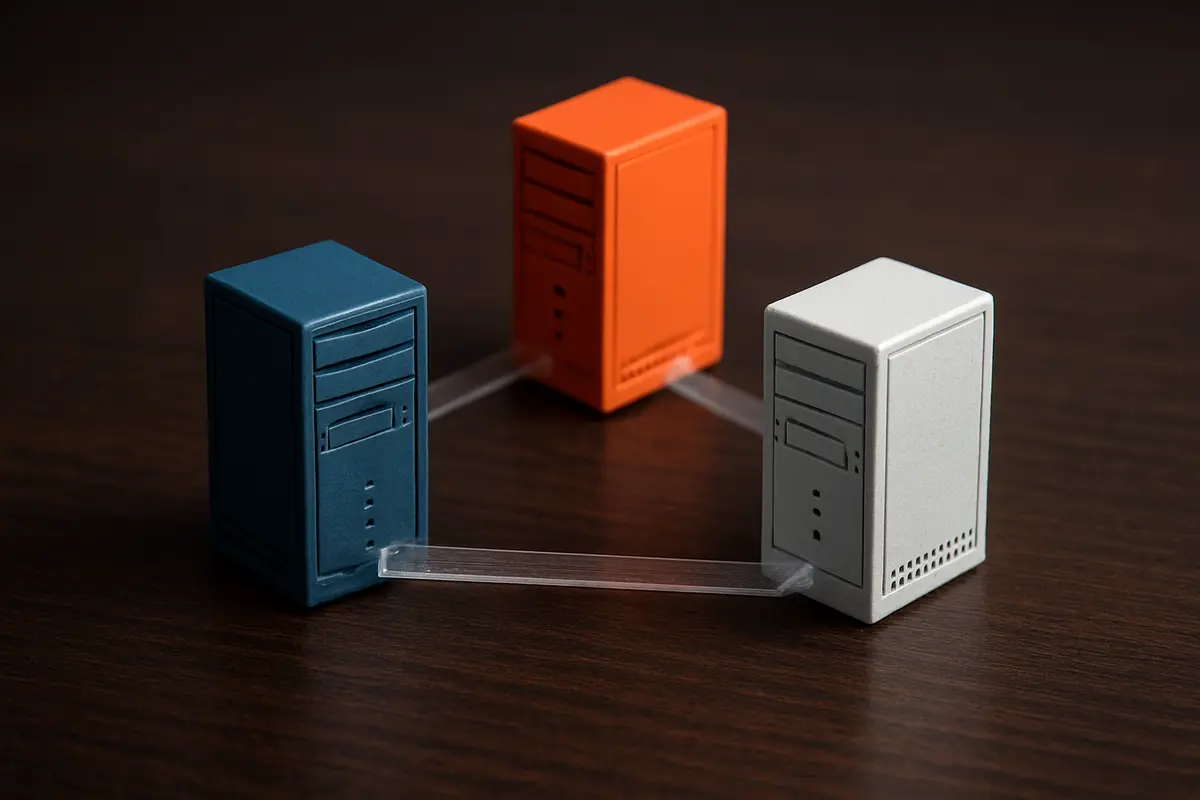
According to blogs.cisco.com, Cisco is extending the protection of its security solution Cisco AI Defense to Google Cloud. This means the platform now supports a third major cloud provider alongside AWS and Microsoft Azure. The background is the growing threat landscape: According to the 2025 Cisco Cybersecurity Readiness Index, 86% of organizations have experienced an AI-related security incident in the past 12 months, while fewer than half have sufficient resources for comprehensive AI security assessments.
The solution is aimed at organizations that, for example, run models on the Gemini Enterprise Agent Platform or manage agent-based workflows in Google Cloud. Key features include automated security testing, runtime protection for AI agents, and automatic discovery of AI resources. For organizations with strict data requirements, a VPC deployment option is available that keeps all data within the Google Cloud environment.
| Feature | Description |
|---|---|
| AI Model & Application Validation | Automated red teaming across more than 200 safety and security categories |
| AI Runtime Protection | Bidirectional guardrails against prompt injection, tool misuse, and data exfiltration |
| AI Cloud Visibility | Automatic discovery of AI resources such as models, agents, and data sources |
| AI Supply Chain Risk Management | Continuous scanning of model files, repositories, and MCP servers |
Cisco AI Defense aligns with established security standards such as OWASP Top 10 for LLMs, MITRE ATLAS, and NIST Adversarial ML Taxonomy and supports compliance with the EU AI Act. Integration is done via Google Kubernetes Engine (GKE) Service Extensions as an inline policy module — without changes to agent code. At Google Cloud Next 2026 in Las Vegas, the solution can be viewed at Cisco Booth #4813. For organizations looking to strengthen their multi-cloud security strategy with unified network security and vulnerability management, the platform offers consistent protection across all supported cloud providers.
Deploying Harbor in Air-Gapped VCF 9.0 Environments
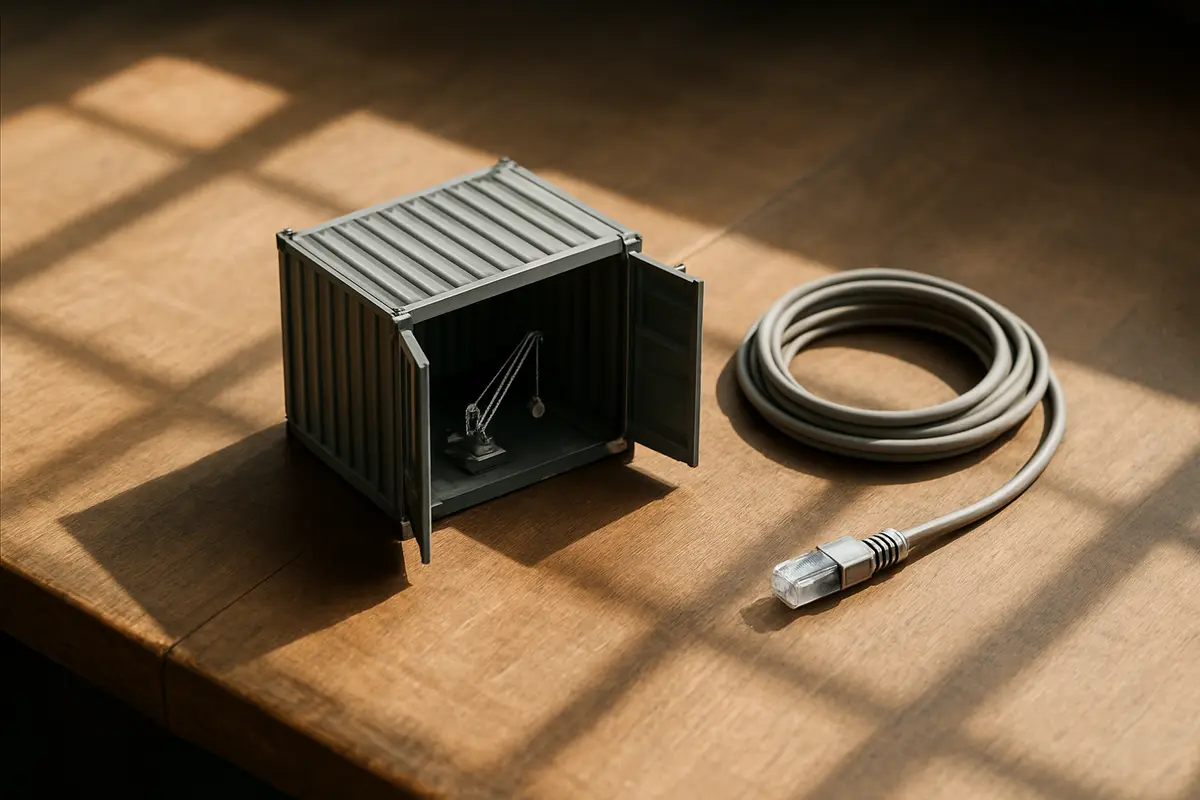
In modern private cloud infrastructures, deploying container registries in fully isolated networks presents a particular challenge. VMware Cloud Foundation (VCF) 9.0 now provides a systematic way to operate Harbor as a Supervisor Service in air-gapped environments — networks that are physically or logically disconnected from the internet. Such architectures are not optional but mandatory for regulated industries such as financial services, government, healthcare, and defense.
The central problem is the so-called bootstrap problem: Harbor Supervisor Service requires container images for its own installation, but in an isolated environment there is initially no registry from which these images can be pulled. The solution consists of a two-phase approach. First, the Bitnami Harbor OVA is deployed as a virtual machine that serves as a temporary bootstrap registry. This preconfigured appliance can be deployed quickly and provides classic VM-based management. In a second step, Harbor is installed as a native Supervisor Service, which then functions as the production container registry.
| Phase | Component | Function |
|---|---|---|
| Phase 1 | Bitnami Harbor OVA | Temporary bootstrap registry for Supervisor Service images |
| Phase 2 | Harbor Supervisor Service | Production registry with native VCF integration |
After deployment, the Harbor Supervisor Service offers native integration into VCF lifecycle management, scalability with the Supervisor infrastructure, enterprise support through Broadcom, and connectivity to vSphere Namespaces and VKS clusters. Prerequisites for deployment are a VCF 9.0 environment with an enabled Supervisor and the Harbor Supervisor Service Package YAML. After successful installation, the bootstrap registry can either be decommissioned or retained as a backup.
Conclusion
Today’s news highlights important developments that bring both opportunities and challenges.
Frequently Asked Questions
On what basis were these news items summarized?
Exclusively based on the original texts of the linked sources.
📚 Sources
- 🔗 about.gitlab.com: GitLab AI Hackathon 2026: Meet the winners…
- 🔗 aws.amazon.com: Amazon SageMaker Unified Studio now supports multiple code spaces with…
- 🔗 blog.google: 10 leading enterprises show why agents mean business…
- 🔗 blogs.cisco.com: Securing Enterprise AI: Cisco AI Defense Expands to Google Cloud…
- 🔗 blogs.vmware.com: Deploying Harbor Service in Air-Gapped VMware Cloud Foundation 9.0…