






















Tech News: Latest Updates from 2026-02-28

Tech roundup for 2026-02-28.
This report was automatically generated by AnishoAI. Automate your content production — visit us for more information and pricing.
Vercel Queues Enters Public Beta

Vercel announced that Vercel Queues, a durable event streaming system built with Fluid compute, is now available in public beta for all teams. Vercel Queues also powers Workflow: Queues can be used for direct message publishing and consumption, while Workflow is intended for multi-step orchestration.
The system provides at-least-once delivery semantics with automatic retries and delivery guarantees. Messages are sent to a durable topic, fanned out to subscribed consumer groups, and redelivered until successfully processed or expired. Adding a trigger makes a route private, so that only Vercel’s queue infrastructure can invoke it.
| Included Feature |
|---|
| Multiple AZ synchronous replication |
| At-least-once delivery |
| Customizable visibility timeout |
| Delayed delivery |
| Idempotency keys |
| Concurrency control |
| Per-deployment topic partitioning |
According to Vercel, Vercel Queues is billed per API operation, starting at $0.60 per 1M operations. Functions invoked by Queues in push mode are charged at existing Fluid compute rates.
Why You Should Think Twice Before Tapping Allow
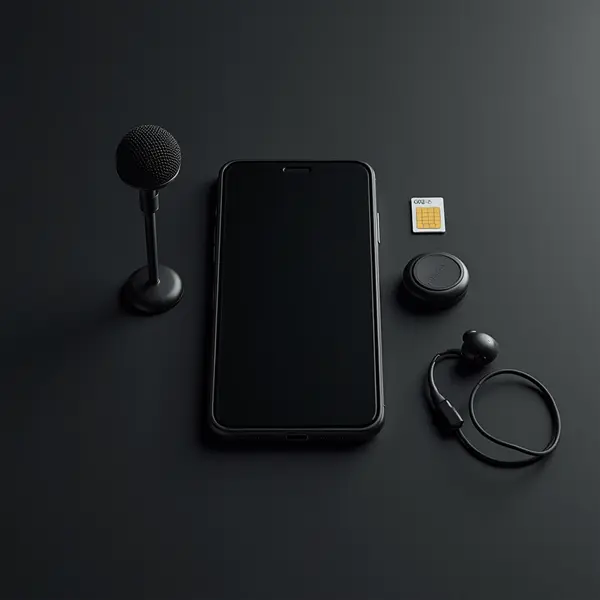
App permissions act as a gatekeeper between your smartphone’s data and the applications you install. Every time you download a new app or enable a new feature, your device asks whether you consent to sharing certain information. Yet many users tap “allow” without a second thought, potentially exposing sensitive data to developers who may misuse it.
Modern mobile operating systems handle these requests differently. Since Android 6.0, permissions are split into two types: normal permissions like internet access, which are silently granted at install with no prompt, and dangerous permissions such as location, microphone, or contacts, which require explicit user approval at runtime. Newer Android versions added further categories, including background location and notifications, requiring separate or multi-step consent. iOS takes a similar approach, surfacing all sensitive permission requests at runtime. Granting excessive access could let bad actors harvest banking passwords, intercept one-time SMS passcodes, enrol devices in premium-rate subscription services, monitor your physical location, activate your camera or mic as a bugging device, encrypt files for ransom, or install malware such as infostealers and ransomware. AI assistant apps pose a growing concern, as many request always-on microphone access for wake-word detection along with contacts, calendar, and sometimes screen content. Health and fitness apps also carry underappreciated risk, since shared health metrics can have real-world consequences for insurance and data brokerage.
| High-Risk Permission | Why It’s Dangerous | Platform Safeguards |
|---|---|---|
| Accessibility services (“God mode”) | Can read keystrokes, messages, and silently grant itself other permissions | Not available on iOS; Android blocks this for apps installed outside the Play Store and rechecks consent every few weeks |
| Background location | Enables continuous tracking to build a detailed profile of daily movements | Android and iOS prevent upfront “always allow” and periodically ask users to reconfirm |
| SMS/call logs | Allows reading one-time passcodes and potentially hijacking accounts | Android requires the app to be registered as the Default App; iOS blocks App Store apps from requesting SMS or call history access |
| Overlay permission | Lets an app draw a window over other apps, enabling “clickjacking” attacks | Android requires manual activation via Settings > Apps > Special App Access > Appear on top; iOS has no equivalent permission |
Before granting any permission, consider whether it is genuinely necessary for the app to function as intended. A calculator requesting camera access or a mobile game asking for your contacts should raise immediate red flags. Taking a moment to evaluate each request remains the most effective way to protect your personal data.
Small Security Signals Can Combine Into Breaches

According to blog.cloudflare.com, minor misconfigurations, overlooked firewall events, or request anomalies may feel harmless on their own, but when these small signals converge, they can explode into security incidents known as “toxic combinations.” These are exploits where an attacker discovers and compounds many minor issues — such as a debug flag left on a web application or an unauthenticated application path — to breach systems or exfiltrate data.
While point defenses like Web Application Firewalls (WAF), bot detection, and API protection primarily focus on evaluating the risk of an individual request, Cloudflare’s detections for toxic combinations shift the lens toward broader intent, analyzing the confluence of context surrounding multiple signals to identify a brewing incident. Signals considered include bot traffic, sensitive application paths such as admin or debug endpoints, anomalies such as rate-limit evasion and request spikes, and vulnerabilities or misconfigurations.
Looking at a 24-hour window of data, the blog reports that about 11% of the hosts analyzed were susceptible to these combinations, skewed by vulnerable WordPress websites. Excluding WordPress sites, only 0.25% of hosts showed signs of exploitable toxic combinations. While rare, these represent hosts that are vulnerable to compromise. Findings were broken into three stages: estimated hosts probed (the “wide net”), estimated hosts filtered by toxic combination, and estimated reachable hosts (the “smoking gun”). Cloudflare Log Explorer can be used to execute detection queries on unsampled logs, though the post notes that detection queries are necessary but not sufficient without testing for reachability, as findings might be false positives.
Gemini Lets Users Create Lunar New Year Music Tracks

According to blog.google, a new experience inside the Gemini app allows users to create and share personalized musical tracks to celebrate the Lunar New Year and the Year of the Fire Horse in 2026. The feature uses the Lyria 3 model to transform greetings into high-fidelity 30-second audio tracks with bespoke cover art.
Users can tap the “Try it” button on the time-limited Year of the Horse discovery banner in the Gemini app. The app then prompts for a recipient’s name, a personal message, and details about the recipient’s hobbies or quirks. After selecting a music genre, Gemini synthesizes original lyrics, composes the audio track, and generates custom cover art featuring traditional red and gold motifs.
| Available Genres |
|---|
| Rock |
| Ballad |
| Chinese Classical |
| R&B |
| Jazz |
| Mandopop-Trap |
| Luk Thung |
The discovery banner is available to Gemini app users in Singapore, Thailand, Malaysia, Indonesia, South Korea, Vietnam, Philippines, Taiwan, Brunei and Mongolia until March 3, wrapping up alongside the traditional Lantern Festival. Completed tracks can be exported to messaging platforms such as WhatsApp, WeChat, KakaoTalk and iMessage.
Maggie Kang Shapes Galaxy Unpacked 2026 Experience

According to news.samsung.com, Samsung Electronics hosted Galaxy Unpacked 2026 on Feb 25 in San Francisco, unveiling the Galaxy S26 series, described as the third generation of AI phones. Maggie Kang, co-director of KPOP DEMON HUNTERS, joined the event as creative partner, shaping the experience from concept to stage.
In an interview with Samsung Newsroom, Kang said she focused on storytelling and making technology feel relatable to users. She emphasized weaving in the Korean element, noting that Samsung, headquartered in Korea, carries a legacy of unique cultural significance. She also recalled a memorable in-person collaboration session during a visit to Seoul last December.
Kang helped convey the event’s theme, “Stars by Your Side,” aiming to make AI experiences feel closer, more approachable and personal. She described Samsung as representing a unique bridge between heritage and the future, and praised the team’s openness to unconventional creative ideas.
Looking ahead, Kang expressed interest in continuing cross-industry collaboration, calling the intersection of culture, narrative and innovation an exciting space for creating meaningful experiences.
Conclusion
Today’s tech landscape highlights a strong push toward smarter infrastructure and AI-driven experiences, from Vercel’s durable event streaming system entering public beta to Google’s Gemini app using the Lyria 3 model for personalized music creation. At the same time, security remains a critical concern, with Cloudflare warning that minor misconfigurations can compound into serious breaches, and mobile experts urging users to carefully manage app permissions.
FAQ
What delivery guarantees does Vercel Queues provide in its public beta?
Vercel Queues provides at-least-once delivery semantics with automatic retries. Messages are sent to a durable topic, fanned out to subscribed consumer groups, and redelivered until successfully processed or expired. It also features multiple availability zone synchronous replication.
What are “toxic combinations” according to Cloudflare?
Toxic combinations are security incidents where an attacker discovers and compounds many minor issues — such as a debug flag left on a web application or an unauthenticated application path — to breach systems or exfiltrate data. Cloudflare’s detections shift the focus from evaluating individual requests to analyzing the confluence of context surrounding multiple signals.
What model does the Gemini app use to generate Lunar New Year music tracks?
The Gemini app uses the Lyria 3 model to transform user greetings into high-fidelity 30-second audio tracks with bespoke cover art, allowing users to celebrate the Lunar New Year and the Year of the Fire Horse in 2026.
📚 Sources
- 🔗 Vercel: Vercel Queues now in public beta…
- 🔗 eset.com: Mobile app permissions (still) matter more than you may think…
- 🔗 blog.cloudflare.com: Toxic combinations: when small signals add up to a security incident…
- 🔗 blog.google: Create personalized “Year of the Fire Horse” musical tracks with Gemin…
- 🔗 news.samsung.com: [Interview] [Galaxy Unpacked 2026] Maggie Kang on Making Technology Fe…
Published on February 28, 2026