

















Tech News: Latest Updates from 2026-03-01

Tech roundup for 2026-03-01.
This report was automatically generated by AnishoAI. Automate your content production — visit us for more information and pricing.
Samsung and NVIDIA Advance AI-RAN at MWC 2026
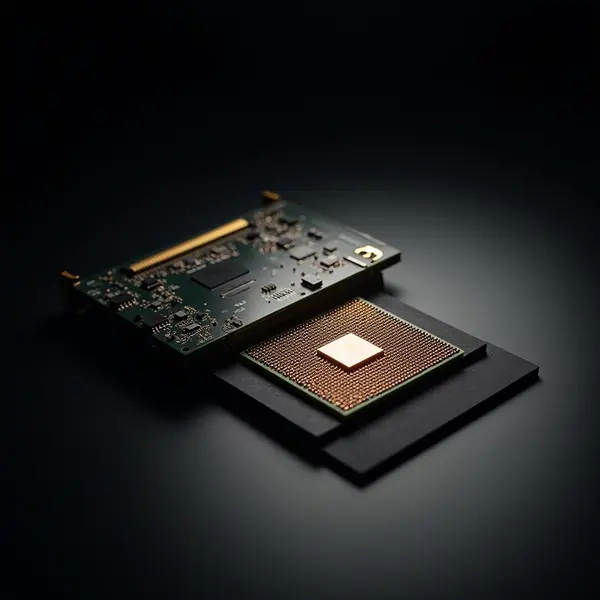
According to news.samsung.com, Samsung Electronics announced on March 1, 2026, the successful completion of a multi-cell test at its R&D center, combining Samsung’s virtualized RAN (vRAN) software with NVIDIA’s accelerated computing platform. The test validates the performance of the integrated solution in a realistic network environment, marking a key step toward commercial deployment. Samsung will feature this milestone at Mobile World Congress (MWC) 2026.
At MWC 2026, the company will present an AI-RAN demonstration running on NVIDIA AI infrastructure, showcasing an AI-based downlink performance boost (AI MIMO1 beamformer) that leverages AI algorithms for improved throughput. The demonstration aims to show how AI can deliver higher spectral efficiency for operators, extracting more capacity from existing spectrum.
Samsung and NVIDIA are also collaborating on driving innovations to enable high-speed connections between the CPU and GPU by leveraging Samsung’s vRAN and NVIDIA’s unified processor that embeds CPU and GPU into a single chipset. Last month, the companies completed the integration of Samsung’s vRAN software and NVIDIA’s ARC Compact equipped with NVIDIA Grace CPU and NVIDIA L4 GPU.
“Operators today need AI-native, software-defined infrastructure to stay ahead of evolving connectivity demands,” said Soma Velayutham, VP of AI and Telecoms, NVIDIA. Samsung Networks has pioneered the successful delivery of 5G end-to-end solutions, including chipsets, radios and cores, and currently provides network solutions to mobile operators worldwide.
NVIDIA Unveils AI Tools for Autonomous Telecom Networks
Ahead of Mobile World Congress Barcelona, NVIDIA unveiled an open Nemotron-based large telco model (LTM), a guide for building reasoning agents for network operations, and new NVIDIA Blueprints for energy saving and network configuration with multi-agent orchestration. These resources are being released through GSMA as part of its new Open Telco AI initiative. According to the latest NVIDIA State of AI in Telecommunications report, network automation emerged as the top AI use case for investment and return on investment.
The NVIDIA Nemotron LTM is a 30-billion-parameter open source model built on the NVIDIA Nemotron 3 family of foundation models and fine-tuned by AdaptKey AI using open telecom datasets. It is optimized to understand telecom industry terminology and reason through workflows such as fault isolation, remediation planning and change validation. NVIDIA and Tech Mahindra have also published an open source guide showing telecom operators how to fine-tune domain-specific reasoning models and build agents that can execute network operations center (NOC) workflows, using the NVIDIA NeMo-Skills pipeline.
The new NVIDIA Blueprint for intent-driven RAN energy efficiency integrates VIAVI’s TeraVM AI RAN Scenario Generator (AI RSG) platform to help operators reduce power consumption in 5G radio access networks while maintaining quality of service. The NVIDIA Blueprint for telco network configuration is being adopted by operators including Cassava Technologies, which is using it to build the Cassava Autonomous Network, an agentic platform designed to optimize Africa’s diverse, multi-vendor mobile networks.
Key Cybersecurity Threats in February 2026

According to eset.com, ESET Chief Security Evangelist Tony Anscombe highlighted several cybersecurity stories that stood out in February 2026. Among the most notable incidents were AI-assisted attacks, ATM jackpotting, and critical infrastructure breaches.
Threat actors misused commercial generative AI tools to compromise more than 600 FortiGate devices located in 55 countries. According to Amazon Threat Intelligence, the attacks exploited exposed management ports and weak credentials without two-factor authentication. Additionally, ESET researchers uncovered PromptSpy, described as the first known case of Android malware abusing generative AI for context-aware user interface manipulation.
The FBI has warned ATM operators about an increase in malware-fueled jackpotting attacks in the U.S., where criminals trick cash machines into dispensing large amounts of cash.
Poland’s CERT published a report at the very end of January 2026 examining cyberattacks at more than 30 organizations operating in critical infrastructure sectors. ESET researchers analyzed a wiper and shared technical details about an incident aimed at an energy company as part of those attacks.
Chat SDK Now Supports Telegram Adapter

According to Vercel, Chat SDK now supports Telegram, extending its single-codebase approach to Slack, Discord, GitHub, and Teams with a new Telegram adapter.
The adapter enables building bots that support mentions, message reactions, direct messages, and typing indicators. It handles single file uploads and renders basic text cards, with buttons and link buttons displayed as inline keyboard elements, allowing developers to create interactive workflows directly within Telegram chats.
There are several known limitations. Telegram does not expose full historical message APIs to bots, so message history relies on adapter-level caching. Additionally, callback data is limited to 64 bytes, and the platform does not currently support modals or ephemeral messages.
Alternative to Web Streams API Promises Major Speed Gains

According to blog.cloudflare.com, the WHATWG Streams Standard, informally known as “Web streams,” has fundamental usability and performance issues that cannot be fixed easily with incremental improvements alone. The standard was developed between 2014 and 2016 and was adopted by Cloudflare Workers, Node.js, Deno, and Bun, becoming the foundation for APIs like fetch().
The post presents an alternative approach built around JavaScript language primitives that can run between 2x to 120x faster than Web streams in every runtime tested, including Cloudflare Workers, Node.js, Deno, Bun, and every major browser. The improvements are attributed not to clever optimizations but to fundamentally different design choices that more effectively leverage modern JavaScript language features.
A key issue highlighted is that the design of Web streams predates async iteration in JavaScript. The for await…of syntax did not land until ES2018, two years after the Streams Standard was initially finalized. This meant the API could not initially leverage what would become the idiomatic way to consume asynchronous sequences in JavaScript. Instead, the spec introduced its own reader/writer acquisition model, leading to what the post describes as excessive ceremony for common operations, including reader acquisition, lock management, and the { value, done } protocol. Additional problems cited include the locking model, where calling getReader() causes the stream to become locked, creating confusion for developers.
Conclusion
The tech landscape in early March 2026 is shaped by the rapid integration of AI into telecommunications infrastructure, with Samsung, NVIDIA, and industry bodies like GSMA driving AI-RAN and autonomous network operations toward commercial deployment. Meanwhile, cybersecurity threats are evolving in sophistication—leveraging generative AI for attacks on hundreds of devices across dozens of countries—and the developer ecosystem continues to mature, as seen in Cloudflare’s proposal for a faster alternative to Web Streams and Vercel’s expansion of Chat SDK to Telegram.
FAQ
What did Samsung and NVIDIA demonstrate at MWC 2026 regarding AI-RAN?
They completed a multi-cell test combining Samsung’s virtualized RAN software with NVIDIA’s accelerated computing platform and showcased an AI-based downlink performance boost (AI MIMO1 beamformer) that uses AI algorithms to deliver higher spectral efficiency and improved throughput.
What is the NVIDIA Nemotron Large Telco Model (LTM)?
It is a 30-billion-parameter open source model built on the NVIDIA Nemotron 3 family, fine-tuned by AdaptKey AI using open telecom datasets, and optimized to understand telecom industry terminology and reason through network operations workflows.
How much faster is Cloudflare’s proposed alternative to the Web Streams API?
According to Cloudflare, the alternative approach runs between 2x to 120x faster than Web Streams in every runtime tested, including Cloudflare Workers, Node.js, Deno, Bun, and every major browser, thanks to fundamentally different design choices leveraging modern JavaScript language features.
📚 Sources
- 🔗 news.samsung.com: Samsung Takes Next Stride Toward AI-Native Software-Driven Networks Wi…
- 🔗 NVIDIA: NVIDIA Advances Autonomous Networks With Agentic AI Blueprints and Tel…
- 🔗 eset.com: This month in security with Tony Anscombe – February 2026 edition…
- 🔗 Vercel: Chat SDK adds Telegram adapter support…
- 🔗 blog.cloudflare.com: We deserve a better streams API for JavaScript…