











Tech News: Latest Updates 2026-03-16

This report is a summary of technology news from 2026-03-16 and has been prepared solely based on the original source texts.
This report was automatically generated by AnishoAI. For automating your website’s content production, visit anishoai.com for more information and to view plans.
AI-Based Smart City; The Next Step in Smart City Evolution

According to press.asus.com, the concept of AI City has been introduced as the next stage in the evolution of Smart Cities. While traditional smart cities focused on sensors, connectivity, and data integration, AI City integrates artificial intelligence into the city’s operational fabric so that systems can understand context, predict changes, and coordinate responses. In this regard, the concept of Urban Sovereign AI emphasizes the city’s ability to maintain sovereignty over its data, computational resources, and AI models.
According to this report, ASUS and Foxconn began collaborating in 2026 to deliver AI City solutions to governments worldwide. This architecture consists of five layers:
| Layer | Function |
|---|---|
| Sovereign Compute Layer | Secure infrastructure including data centers, networks, and edge computing with low latency and high availability |
| Sovereign Model Layer | Locally optimized models for language, context, and regulatory compliance |
| Platform Layer | Identity and access management, cross-system integration, cybersecurity, and decision traceability |
| Application Layer | Operational services in the areas of transportation, energy, safety, and health |
| Innovation Layer | Shared assets and high-performance computing for development and collaboration with industry and academia |
In terms of governance, the Operating Model includes Decision Rights, Identity Access Management with Zero-trust principles, and Cross‑Agency Coordination. Priority areas include Adaptive Mobility (dynamic traffic management and smart parking) and Responsive Energy. As an example, instead of dashboards showing full trash bins, an AI City predicts fill rates, reroutes teams, coordinates traffic lights, and confirms task completion.
Panasonic’s Nessum; IoT Connectivity Where Wi-Fi Can’t Reach

According to news.panasonic.com, the technology division of Panasonic Holdings Corporation offers power line communication (PLC) technology under the Nessum brand for B2B customers. This technology, called High Definition Power Line Communication (HD-PLC), was developed in 2002 with the goal of creating IoT networks in locations where Wi-Fi and 4G/5G cannot provide coverage, such as factories and infrastructure environments.
Michimasa Aramaki from the technology division of Panasonic Holdings Corporation, who leads the international standardization and deployment of Nessum, explains that the original idea was to simultaneously transmit power and communications through a single infrastructure. Aramaki was working in Panasonic’s R&D division in Silicon Valley during the development of HD-PLC and conducted field tests in rental apartments in California and Texas with over a hundred engineers. Standardization of HD-PLC under IEEE 1901 was achieved in 2010, but the rapid expansion of Wi-Fi caused the development team to shift from consumer use (B2C) to building and industrial infrastructure (B2B).
Panasonic’s proprietary HD Multi-hop technology enables coverage of several kilometers with 1,024 nodes. According to Aramaki, Nessum is useful in locations where radio waves cannot reach; such as elevators where metal walls block signals, underground facilities, and mining and tunnel workshops. He emphasizes that even in emergency situations such as mining accidents, there is always electrical wiring for lighting or drilling equipment, and by connecting PLC modems to both ends of this wiring, remote monitoring and communication become possible. Among Nessum’s collaborations is a partnership with the global HVAC manufacturer Daikin Industries, Ltd.
Google.org Report on 5 Years of Investment in Digital Skills

According to a report published by blog.google, the Future of Work program has invested over $150 million in digital skills training over 5 years. Working with 70 organizations across 41 European countries, the program has reached millions of people from underserved communities. Google.org has now published four key lessons from this experience with a focus on the AI era and has launched new initiatives such as the AI Opportunity Fund and AI Works for Europe.
According to this report, the first lesson is “context-appropriate problem solving.” For example, research by the organization Generation found that AI-based hiring bias exists against mid-career workers, and a targeted program with an 83% employment rate was designed. Additionally, two sisters named Asmaan and Farzaneh who arrived in Germany from Afghanistan acquired technical and language skills with the help of DigiCo and entered a web development program. The second lesson is balancing skill development with a growth mindset; according to the report, the organization TSL stated that 69% of SkillPlus program employees continued learning after completing the course.
| Organization | Metric | Result |
|---|---|---|
| Generation | Targeted program employment rate | 83% |
| INCO | Course completion rate with comprehensive support | 44% |
| TSL | Continued learning after program completion | 69% |
| Czechitas | Share of graduates in mentoring community | 40% |
| Diia.Osvita (Ukraine) | National adult coverage | 52% |
The third lesson is building long-term infrastructure; by providing flexible budgets to local nonprofit organizations, sustainable and resilient programs are created. The fourth lesson is systemic impact; for example, the Diia.Osvita platform in Ukraine evolved from a local project into national infrastructure and now covers 52% of adults. According to this report, by providing risk-free budgets to nonprofit organizations, it becomes possible to test innovative ideas that can be turned into policy models.
Expansion of Cisco Secure AI Factory with NVIDIA to the Network Edge
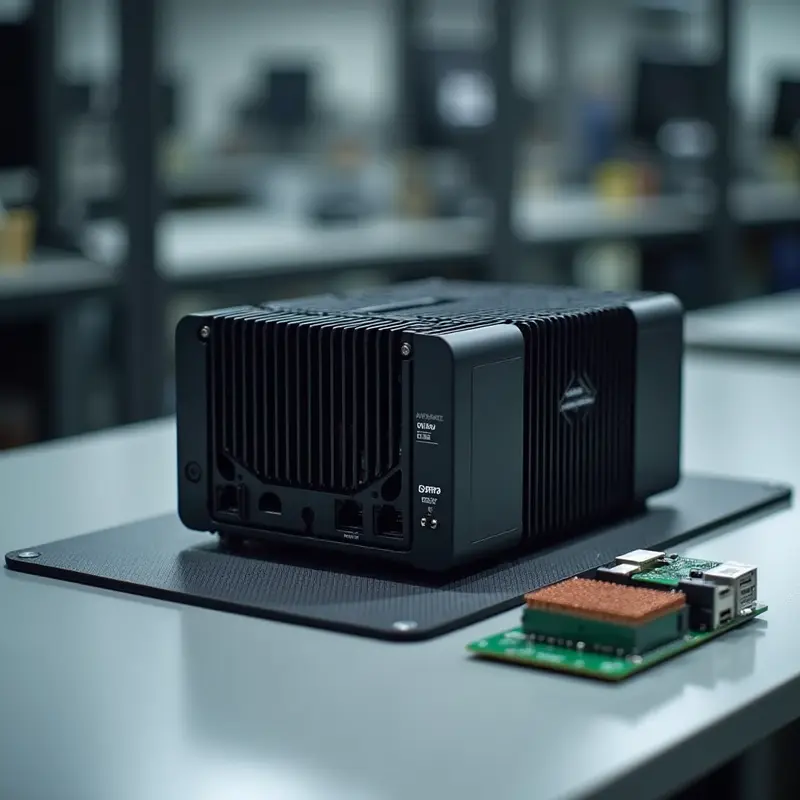
According to blogs.cisco.com, Cisco announced at the NVIDIA GTC event that it is expanding the Cisco Secure AI Factory from the data center to the network edge. This architecture, which was introduced a year ago at the same event by Cisco and NVIDIA, is built on Cisco AI PODs and Cisco Validated Designs and integrates security across all layers of AI infrastructure.
According to this report, security is currently the biggest barrier to the adoption of AI agents in organizations. Unlike simple chatbots, these autonomous agents have the ability to call APIs, access data, and make decisions, and they use large language models (LLM) and small language models (SLM) for reasoning. If these models are attacked or fail, risks such as incorrect operational decision-making, workflow disruption, and violations of personally identifiable information (PII) regulations arise.
Cisco provides a unified security posture regardless of where agents run using Cisco AI Defense. For example, at the GTC event, a new reference architecture was demonstrated for predicting inventory shortages in warehouses based on the NVIDIA Multi-Agent Intelligent Warehouse blueprint. In this solution, Vaidio acts as the warehouse visual monitoring system and, upon detecting inventory shortages, activates an Aible agent on Cisco Unified Edge via REST API, which uses SLM for local processing.
Apache Spark 4.1 Reduces Latency to Milliseconds with Real-Time Mode

With the release of Real-Time Mode (RTM) in Apache Spark 4.1, the Structured Streaming engine can now process data with millisecond-level latency. Previously, choosing a stream processing engine meant a trade-off between high throughput with Apache Spark and low latency with Apache Flink. Now with the introduction of RTM, it is possible to use a single engine for both types of workloads without needing to manage two completely different systems.
The previous Structured Streaming architecture was based on microbatch; incoming data was divided into separate batches called epochs and processed. This approach worked excellently for high-throughput processing because the fixed overhead was amortized across multiple records and vectorized execution also increased efficiency. However, reducing batch sizes quickly hit a wall; fixed costs such as writing logs to object storage, state updates, logical and physical planning, and task scheduling created hundreds of milliseconds to several seconds of latency.
The development team’s solution was to evolve the microbatch architecture without abandoning its advantages. In RTM mode, data flows continuously through different stages without stopping. Epochs have been made longer to amortize checkpointing overhead, and recovery barriers are still used at epoch boundaries for fault tolerance. Additionally, processing stages that previously ran sequentially now operate concurrently; reducers begin processing immediately after shuffle files are ready without waiting for all mappers to finish. This change has dramatically reduced end-to-end latency.
| Feature | Microbatch Mode | Real-Time Mode (RTM) |
|---|---|---|
| Latency level | Seconds | Milliseconds |
| Data flow | Blocking | Non-blocking |
| Stage execution | Sequential | Concurrent |
| Fault tolerance | Exactly-once based on lineage | Exactly-once based on lineage |
Summary
Today’s main technology trends revolve around the expansion of artificial intelligence in urban and organizational infrastructure; from the collaboration of ASUS and Foxconn to deliver AI City solutions to governments, to the expansion of Cisco Secure AI Factory with NVIDIA to the network edge. Also in the data processing domain, Apache Spark 4.1 with Real-Time mode has reduced streaming processing latency to the millisecond level and eliminated the need to manage two separate systems.
Frequently Asked Questions
What architecture does the ASUS and Foxconn collaboration in the AI-based smart city domain include?
This AI City architecture consists of five layers where the Sovereign Compute Layer provides secure infrastructure including computational centers, and the concept of Urban Sovereign AI emphasizes the city’s sovereignty over its data, computational resources, and AI models.
What problem does Panasonic’s Nessum technology solve in the IoT connectivity domain?
Nessum technology, which works based on power line communication (PLC), provides IoT networks in locations where Wi-Fi and 4G/5G cannot provide coverage, such as factories and infrastructure environments, and enables simultaneous transmission of power and communications through a single infrastructure.
What advantage does Real-Time mode in Apache Spark 4.1 have over the previous architecture?
The previous Structured Streaming architecture was based on microbatch, but Real-Time Mode (RTM) has reduced processing latency to the millisecond level and made it possible to use a single engine for both high-throughput and low-latency workloads.
📚 Sources
- 🔗 press.asus.com: AI City: The Next Stage in the Evolution of Smart Cities…
- 🔗 news.panasonic.com: Nessum: Bridging the IoT Communication Gap—Visualizing Future Social I…
- 🔗 blog.google: Google.org Future of Work: 5 years of impact and lessons for the AI er…
- 🔗 blogs.cisco.com: Cisco gives its Secure AI Factory with NVIDIA a secure multi-agent edg…
- 🔗 databricks.com: Breaking the Microbatch Barrier: The Architecture of Apache Spark Real…
Want to generate content for all your website’s products with a single click?